
Breaking the Binary: A History of Jewellery Beyond Gender

Jewellery has never really been neutral. For thousands of years it has been the language of status, faith, love, and power, worn by kings and queens, priests and warriors, children and elders. Yet somewhere along the way, especially in the West, it became trapped in the binary. Rings, chains, and pendants were boxed up as "for him" or "for her," and the fluidity that once defined adornment was quietly written out.
A Past Without Labels
In antiquity, jewellery was not gendered. Egyptian pharaohs dripped in gold collars and bejewelled headdresses. Roman men wore signet rings, chains, and gemstone intaglios as everyday markers of identity. Medieval knights fastened gilded belts and crosses over their armour. Pearls, sapphires, emeralds, all were fair game. Jewellery's purpose was symbolism, not separation.
It wasn't until the 18th and 19th centuries, with the rise of European consumer culture, that jewellery started to split along gendered lines. Industrialisation and marketing created clear categories of masculine and feminine adornment. Diamonds became the currency of heterosexual romance, while gold watch chains and cufflinks were pitched as suitably masculine tokens.

The 20th Century Divide
By the mid-20th century, jewellery had become heavily policed by gender expectations. Women were encouraged to collect diamonds, pearls, and ladylike charms; men were largely restricted to wristwatches and wedding bands. Anything outside those lanes was dismissed as flamboyant, effeminate, or rebellious.
And yet, cracks kept appearing. Jazz-age dandies, 1970s rock stars, and 1990s rappers all bent the rules, reclaiming the drama of adornment. Think of Elvis's pinky rings, Bowie's glitter, Tupac's gold chains. Each era had its rebels who reminded us that jewellery was never meant to be one-size-fits-all.

The Return of Fluidity
Today, those boundaries are crumbling for good. Artists like Harry Styles, Lil Nas X, and Bad Bunny wear pearls and diamonds with ease. Designers are moving away from men's and women's collections, creating instead for bodies and personalities. On TikTok and Instagram, styling a bold curb chain next to a string of pearls is less about gender and more about taste.
It's not just a trend. It's a return. We are circling back to the truth that jewellery has always been a mirror of self, not a set of rules.

Collecting Without Borders
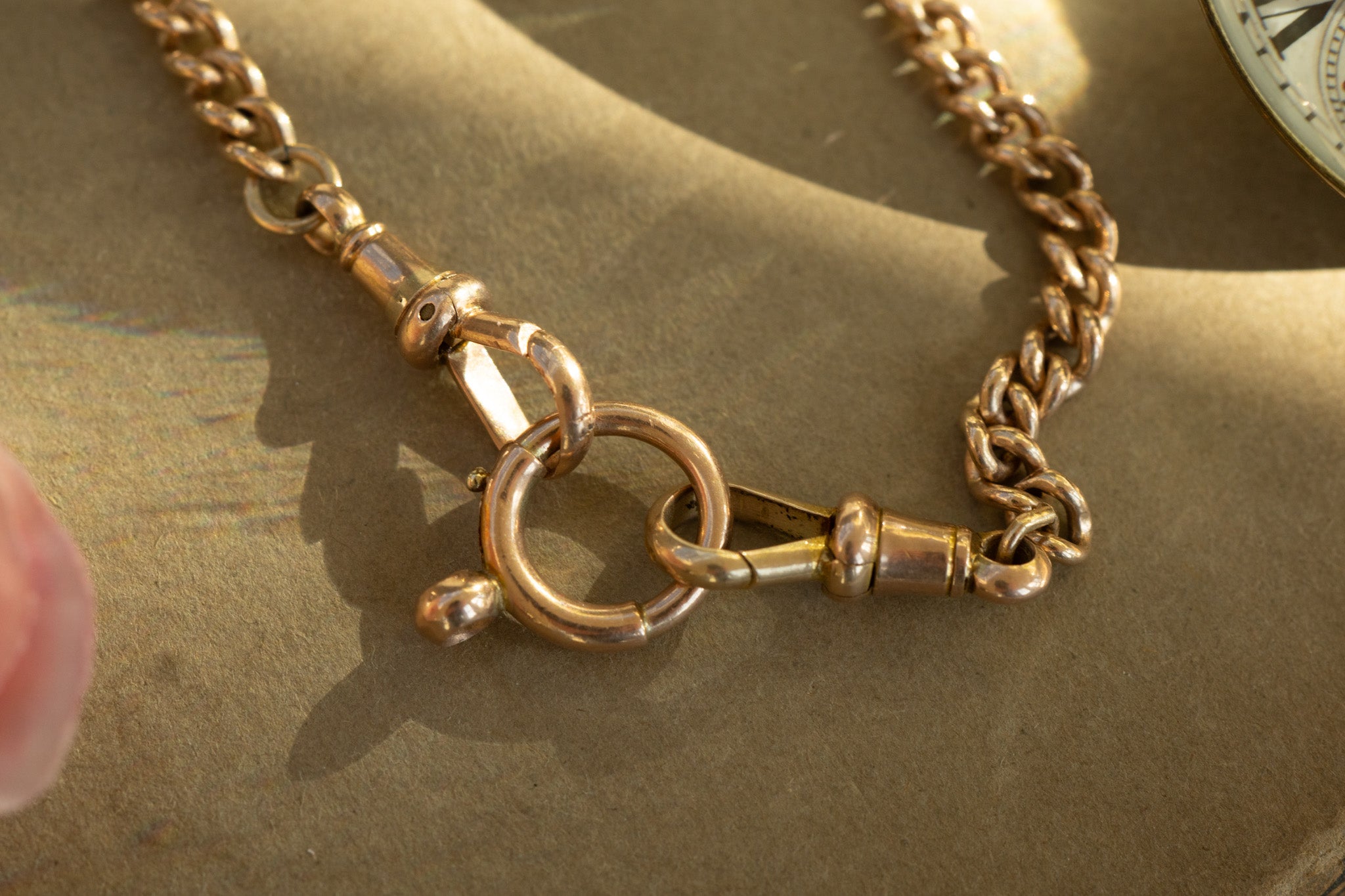
For antique and vintage lovers, this shift is a gift. That heavy Victorian Albert chain? It isn't male, it's powerful. A 1970s disco-era medallion? It doesn't belong to one gender, it belongs to whoever dares to wear it. Collectors can finally see pieces for their craftsmanship, history, and presence rather than the marketing box they were once shoved into.
Why It Matters
Jewellery is one of the most personal forms of expression we have. Breaking the binary is not about erasing tradition, but about reclaiming choice. Whether you want to stack diamond bands, wear a chunky biker chain, or pin on a Victorian brooch, the question should never be "Is this for me?" but simply, "Do I love it?"
Because when you strip away the labels, that's all jewellery has ever been: a way to declare who you are, in metal and gemstones.

Explore our current collection at celestineandopal.co.uk, curated for the collectors, the layer lovers, the gold obsessed.


Leave a comment
This site is protected by hCaptcha and the hCaptcha Privacy Policy and Terms of Service apply.